Bitcoin Miner Repair Guide for Hosting Customers
A hosted Bitcoin miner should be repaired when its expected additional net profit exceeds the all-in repair cost after accounting for downtime, remaining economic life and risk; the hosting provider should coordinate diagnosis, quoting, logistics and verification while the owner approves the expenditure.
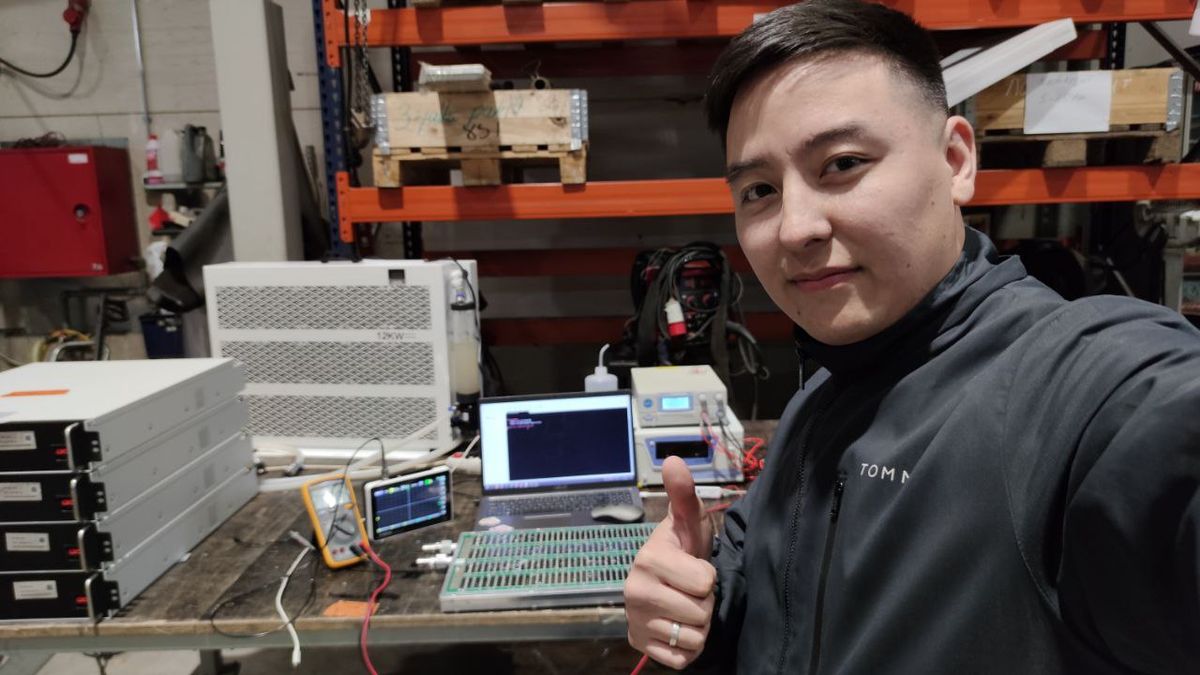
By Hashlabs · Based on real Bitcoin mining hosting and repair operations
When a Bitcoin miner breaks at a hosting facility, the owner should not have to diagnose the fault or chase technicians. A good hosting provider identifies the problem, carries out initial troubleshooting, explains the repair options and asks the customer how to proceed. The customer decides whether the expenditure makes economic sense; the provider normally coordinates the work.
In short: a hosting customer needs a clear diagnosis, one responsible point of contact, an all-in repair quote, a realistic return-to-service estimate and evidence that the miner is hashing again. This guide explains how to organize that process, assess warranties and logistics, calculate repair payback, and reduce future failures.
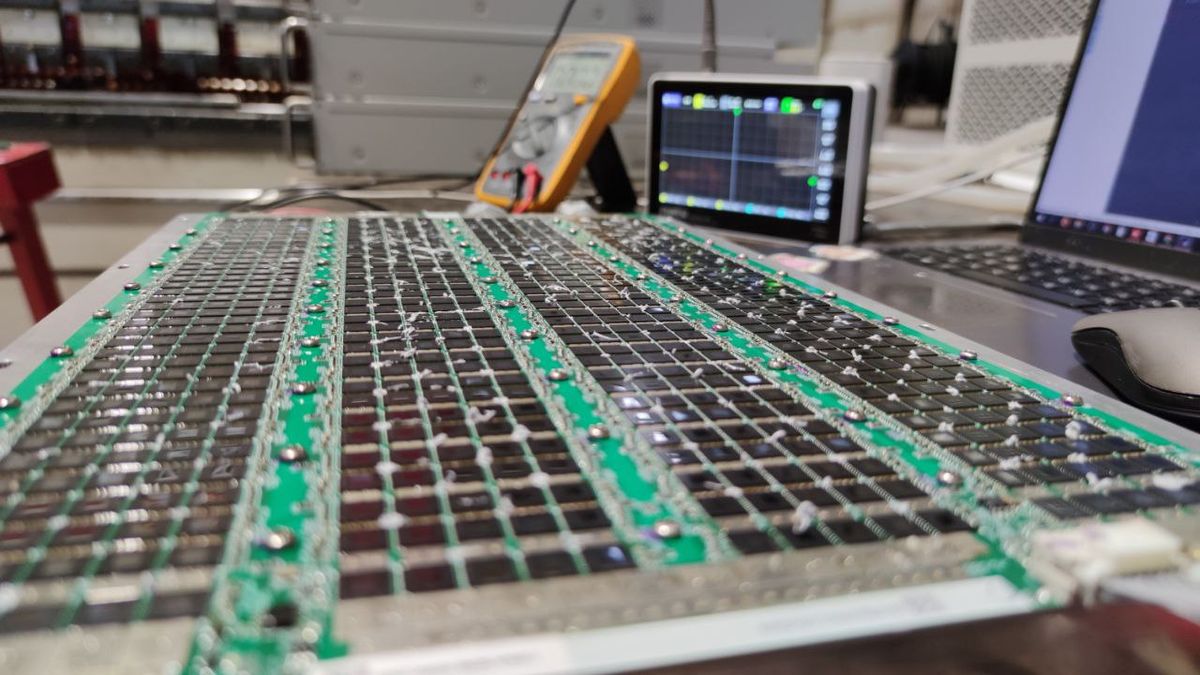
An ASIC hashboard undergoing diagnostics. Photo: Hashlabs operations.
1. What should happen when a hosted Bitcoin miner fails?
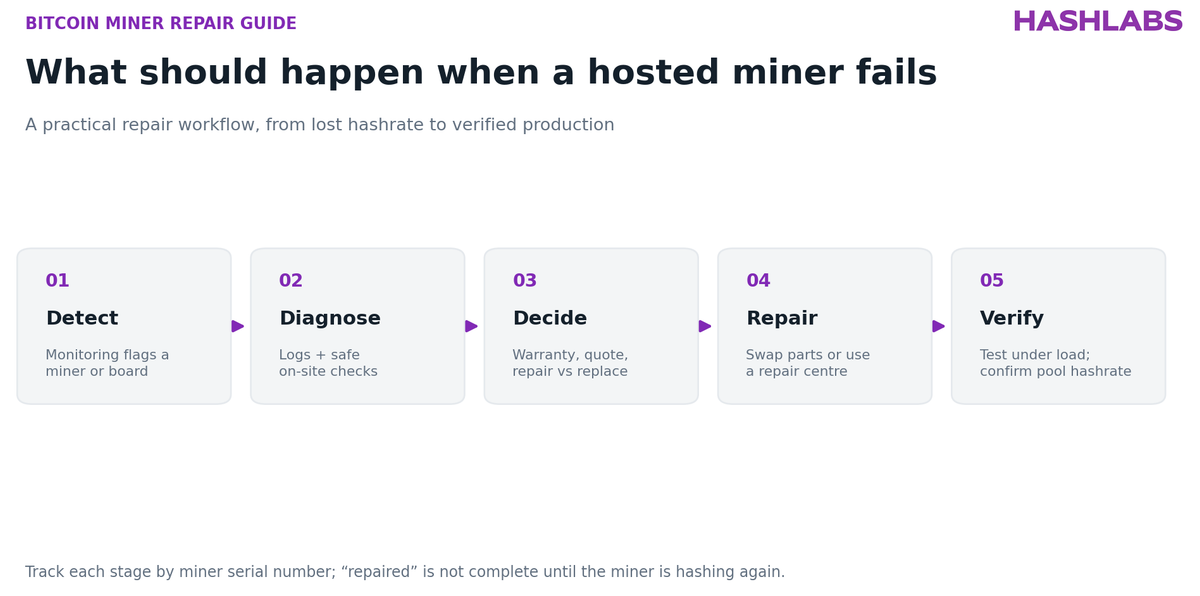
The hosting provider should detect the problem and notify you proactively, rather than wait for you to spot missing mining revenue. It should complete reasonable initial checks before asking you to approve a paid repair.
A useful failure notification answers four questions:
- What happened? Which miner is affected, whether it is completely offline or running at reduced hashrate, and the probable fault. A preliminary diagnosis should be distinguished from a confirmed one.
- What are the options? Can the facility resolve it on site, exchange a faulty component, use a manufacturer's warranty, or send equipment to a specialist?
- What will it cost and how long will it take? You should receive an estimated total cost and a realistic time until the miner can hash again, not just a workshop labor quote.
- What decision is needed? The provider should request authorization unless the work falls under a repair spending limit you have already agreed.
After approval, the hosting provider should coordinate the job, communicate material changes, and verify that the miner is back in production. A repair is only operationally complete when the equipment is reinstalled and hashing normally, not when the workshop marks its task as finished.
2. Who is responsible for the repair?
In most hosted-miner repair arrangements, the hosting provider coordinates diagnosis, specialist repairs and transport, while the equipment owner approves the expenditure. Four parties may be involved, but the hosting provider should normally remain the customer’s single point of contact. Specific obligations depend on the hosting contract.
| Party | What it is responsible for | Who normally communicates with whom? |
|---|---|---|
| Hosting customer | Approves spending and decides whether to repair, replace a component, or retire the miner | Deals with the hosting provider |
| Hosting provider | Monitors and troubleshoots equipment, presents options, obtains approval, coordinates repair and logistics, and verifies return to service | Deals with the customer, repair provider and logistics provider |
| Repair provider | Diagnoses specialist faults, repairs components where possible, and tests the result | Usually deals with the hosting provider |
| Logistics provider | Collects and transports equipment and performs its agreed shipping and customs-related tasks | Usually instructed by the hosting provider |
You can choose to arrange a repair yourself through a manufacturer-authorized or independent workshop, subject to your hosting agreement and access arrangements. But it is often more efficient to let the hosting provider do it. Operators already collect failed equipment at their facilities and may send several miners or components together in repair batches.
It is also common for the customer to receive one repair quote and invoice from the hosting provider. The hosting provider then procures workshop services and transport from its partners. Ask whether the quote includes diagnosis, parts, labor, shipping both ways, reinstallation and testing, and what happens if the repair is unsuccessful. For an example of the coordinated workshop-and-logistics model, see Hashlabs miner repair services.
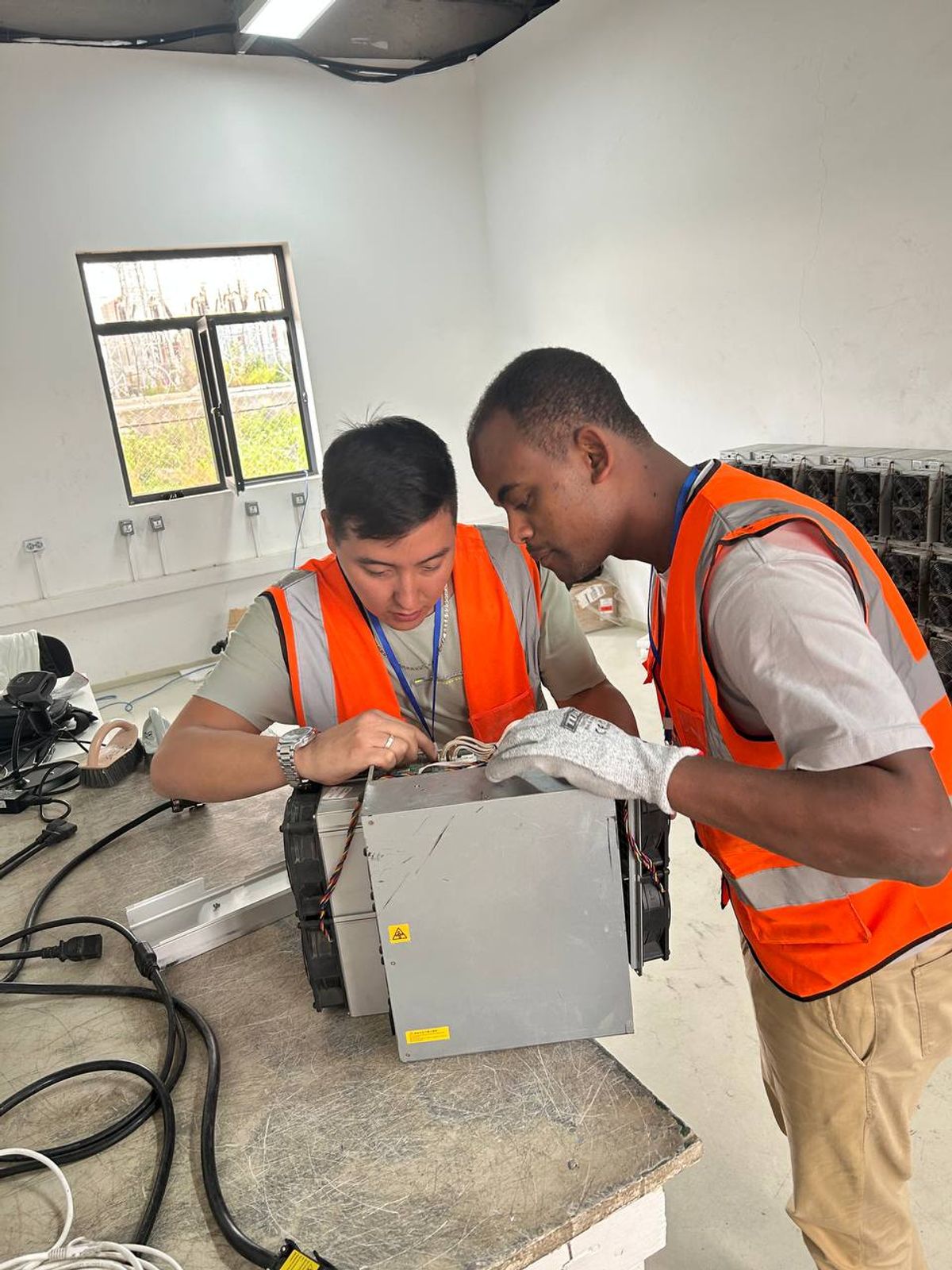
Technicians examining mining equipment. Photo: Hashlabs operations.
3. What actually needs repairing?
Hashboards and power supplies are the main ASIC miner components that require substantial repair decisions. Hashboards may need specialist board-level work, while defective PSUs are often replaced. Control boards and fans can usually be exchanged on site. Hosting customers chiefly need to understand the total cost and likely downtime—not the electronics repair procedure.
| Component | Usual approach | What it means for the customer |
|---|---|---|
| Hashboard | Specialist board-level repair, or replacement | A major reason for sending equipment to a repair center; the cost and downtime must be justified |
| Power supply (PSU) | Frequently replaced; specialist PSU repair is less widely available | Can stop the entire miner, and a compatible replacement can be expensive |
| Control board | Usually replaced on site | Normally a relatively inexpensive, straightforward intervention |
| Cooling fan | Usually replaced on site | Usually inexpensive on air-cooled miners |
A defective hashboard does not always mean an entire miner is beyond repair. On compatible models and firmware, a machine may be able to keep hashing with a board disabled. That can change the economics: repairing one board restores only the lost portion of production, not the output of the whole machine.
For hydro-cooled miners, cooling-system components such as water blocks, seals and pumps can also require service. Those are normally dealt with as part of the facility's maintenance or component-replacement process, though major faults may need specialized support.
Spare parts matter. A facility with compatible PSUs, control boards and other replacement components may return a miner to service well before its defective part has been repaired.
4. Where does the miner go for repair?
Hosted Bitcoin miners are generally repaired through one of three routes: on-site intervention, a domestic workshop or an international repair center. The appropriate route depends on the fault, spare-parts access, warranty rules and available repair facilities—not only distance.
The three common routes are:
- On-site repair or component replacement: The hosting provider resolves a basic fault or installs a spare part at the facility. This usually offers the shortest downtime.
- Domestic repair center: A defective miner or component goes to a specialist in the same country. Transport is typically simpler, but spare-parts availability and workshop queues still matter.
- International repair center: Equipment is shipped abroad, which may introduce additional transport time, customs formalities and longer repair queues.
The manufacturer may require an approved repair route for warranty claims. For other repairs, shipping only the defective hashboard rather than the complete miner can sometimes save money, provided the workshop accepts the component and it can be safely packaged and tested.
Always ask for the expected total time offline: diagnosis, approval, collection, transport, repair, return shipment, installation and testing. The workshop's turnaround time alone is not sufficient.
What Hashlabs learned from repairs in Finland
Hashlabs operates hydro-cooled WhatsMiner M63S and M63S+ machines in Finland. These are premium machines operating in a generally favorable environment, yet hardware failures still require organized repair infrastructure. Because there were no suitably equipped specialist repair centers nearby, we had to manage much of the repair process ourselves. More difficult cases sent to third-party specialists in other countries could be slow both in transit and at the workshop.
| Observation from Finland operations | Recorded result | Why it matters to hosting customers |
|---|---|---|
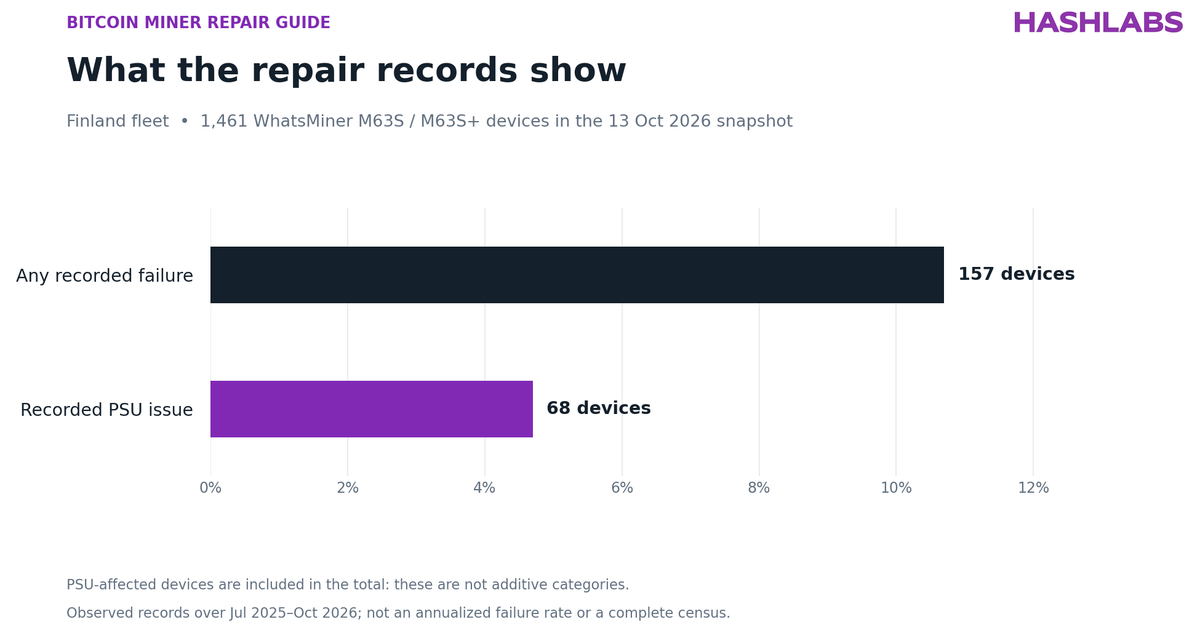
| Reference fleet devices with at least one recorded hardware failure or repair event, July 2025–October 2026 | 10.7% | Even premium hydro-cooled miners require a realistic repair plan |
| Reference fleet devices with a recorded PSU issue | 4.7% | PSU reliability and spare availability affect uptime and cost |
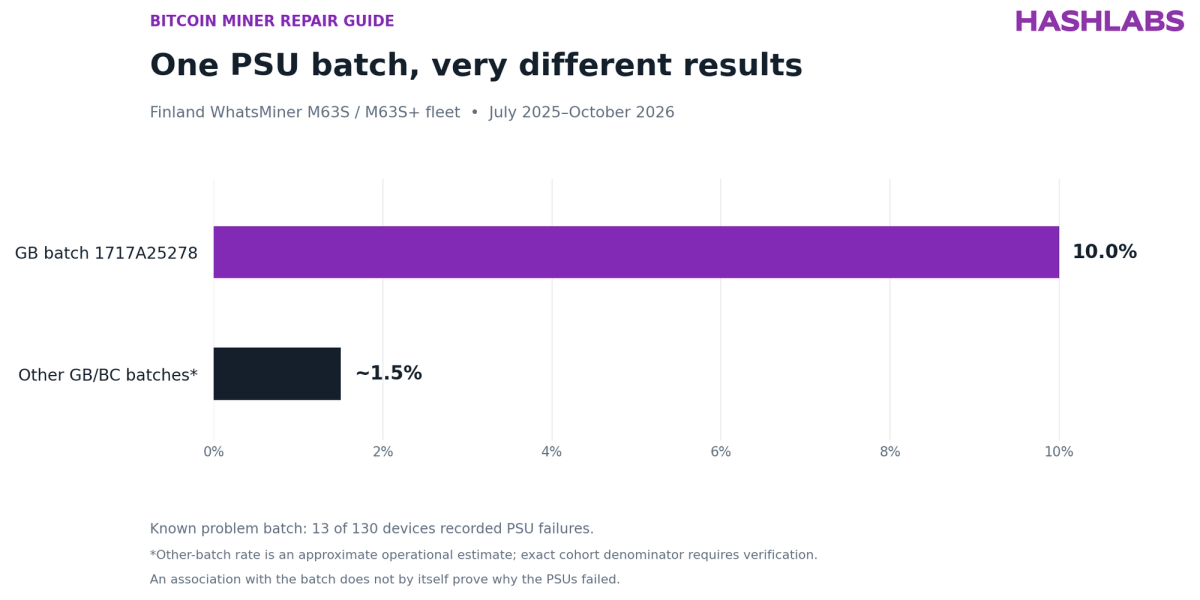
| PSU failures in one GB manufacturing lot | 10.0% | An individual production lot can be substantially less reliable |
| Estimated PSU failure rate in other GB and BC lots | ~1.5% | A supplier label does not tell the whole reliability story |
| Repair time after arrival at the repair operation, in observed jobs | 6–19 days | Workshop time is only part of total downtime |
| One 25-device repair program, dispatch to return | 46 days | Collection and logistics can significantly extend the cycle |
| Median recorded transport charge | $171 per device | Shipping can determine whether a repair is economical |
Source and methodology: Hashlabs’ Finnish fleet monitoring records and repair records, July 2025–October 2026. The 10.7% and 4.7% are counts of affected devices divided by a reference fleet count, not annualized failure probabilities or fixed-cohort results; not all units had equal observation time and some faults may be missing. The other-lot PSU comparison is approximate. Repair time, program duration and shipping charges represent different sets of jobs, not industry averages.
Hashlabs’ Finland fleet finding: Between July 2025 and October 2026, 10.7% of the reference fleet of hydro-cooled WhatsMiner M63S and M63S+ devices had at least one recorded hardware failure or repair event. This is a recorded fraction, not a measured 15-month failure probability for each miner. Even high-quality miners in favorable conditions need a repair plan. Our experience suggests that air-cooled machines in hot or dusty environments can require more maintenance and sometimes more repairs; this is not a controlled cross-model comparison.
Hashlabs’ PSU-batch finding: One GB manufacturing lot had failures in 13 of 130 devices (10%), compared with approximately 1.5% for other GB and BC lots—around 6.7 times the comparison rate. Other lots from both suppliers performed much better, so the data does not show that GB PSUs are generally worse than BC PSUs. We suspected that the affected lot was less tolerant of electrical disturbances, but the records cannot establish a root cause. Hosting customers should ask about reliability of the specific hardware and production batches, not only the manufacturer.
Repair access determines downtime and cost. The observed 6–19 days at the repair operation do not account for all collection, shipping and reinstallation. A 46-day dispatch-to-return program demonstrates why local expertise, spare parts and a workable transport process can be as important as technical repairability. At $171 median recorded transport charges in these jobs, logistics can materially change the repair decision.
The takeaway is simple: before choosing a hosting facility, find out who repairs its machines, where they go and how they return to service.
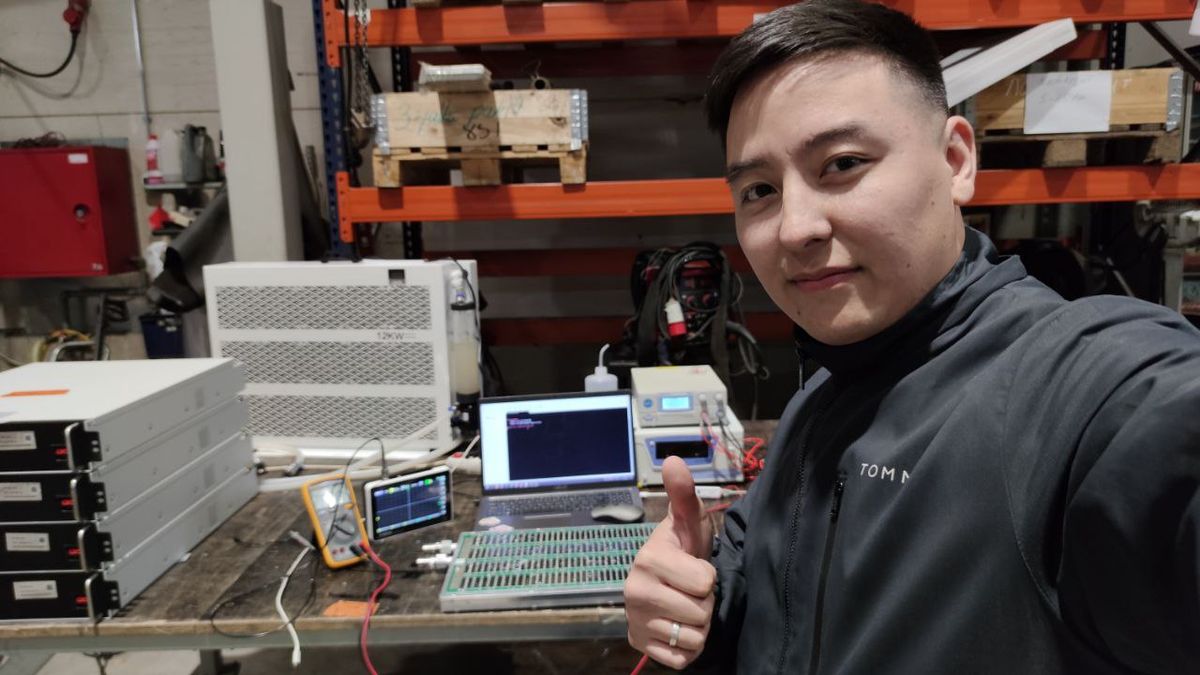
ASIC diagnostics at a repair workbench. Photo: Hashlabs operations.
5. What about manufacturer warranties and repair bills?
The hosting agreement determines who normally pays for a miner repair; the manufacturer warranty determines whether an eligible failure may be repaired without a workshop charge. The equipment owner often bears ordinary hardware-repair costs, while the hosting provider coordinates the work—but contracts differ.
Many new ASIC miners are sold with a manufacturer warranty of around one year, but this is not universal. Check the exact terms for the model and sale. Warranty start dates also vary: for example, BITMAIN states that its warranty for covered new Bitcoin miners is generally 365 days from the official sales shipment date, subject to the sales contract—not from the date the miner starts hashing at your hosting facility.
In our experience, ASIC warranties can be more limited and cumbersome than customers expect from mature consumer electronics. Published conditions can exclude certain types of electrical, environmental or physical damage and unauthorized modifications. Do not assume that an unexpired warranty guarantees a free repair. Verify coverage and the authorized shipping procedure before taking equipment apart or sending it away.
Even if the manufacturer covers workshop labor, shipping, handling and downtime may still make the claim expensive. Your hosting provider should explain whether a warranty claim, paid repair or component replacement is more practical.
For paid work, ask for one all-in quote and confirm the treatment of unsuccessful repairs. Also check your hosting agreement: who pays for ordinary equipment failures, what happens if the host damages equipment, who carries transit risk, and whether hosting charges continue while an individual miner is offline. The answer is contractual, not universal.
6. When is a Bitcoin miner worth repairing?
Repair a miner when the additional profit it is reasonably expected to generate exceeds the total cost of restoring it, allowing for downtime, remaining economic life and risk. A machine can be technically repairable but economically unsuitable for repair.
Here is a worked example using an Antminer S21 XP at 270 TH/s and 3,645 W, based on BITMAIN's published specifications. The hashprice is a rounded October 2026 illustration, not a future revenue prediction; it should be refreshed at the time of the decision. For an explanation of hashprice, see the Hashlabs guide to Bitcoin mining metrics, or check live market conditions in the Hashlabs Terminal.
Step 1: Estimate the profit the repair would restore
| Input or calculation | Example |
|---|---|
| Miner hashrate | 270 TH/s = 0.27 PH/s |
| Power at the wall | 3.645 kW |
| Assumed gross Bitcoin hashprice | $39/PH/day |
| Hosting electricity price | $0.070/kWh |
| Pool fee | 2% of gross revenue |
| Gross mining revenue: 0.27 × $39 | $10.53/day |
| Power cost: 3.645 × 24 × $0.070 | $6.12/day |
| Pool fee | $0.21/day |
| Net operating profit if fully restored | ~$4.20/day = $126 per 30 days |
If the S21 XP is completely offline, repairing it would restore approximately $126 of monthly net operating profit under these assumptions. This excludes any additional hosting fees, taxes or fixed charges not specified in the example.
If two of three boards can continue running under compatible firmware, only the incremental contribution of the failed board should count. Assuming each board represents roughly one-third of hashrate and variable power use, restoring that board would add around $42 per month, not $126. Actual partial-operation performance varies by firmware and machine.
Step 2: Obtain the complete repair quote
Count the repair or replacement component, technician labor, handling, shipping and reinstallation. For consistency, we add $100 in transport and handling to each example:
| Repair | Component or workshop cost | Transport and handling | All-in cost |
|---|---|---|---|
| Hashboard repair | $220 | $100 | $320 |
| PSU replacement | $350 | $100 | $450 |
These are illustrative costs, not current quotes for every repair provider or location.
Step 3: Calculate simple payback and decide
Simple repair payback (months) = all-in repair cost ÷ additional monthly net operating profit restored.
| S21 XP scenario | All-in repair cost | Monthly profit restored | Simple payback |
|---|---|---|---|
| Hashboard repair; entire miner offline | $320 | $126 | ~2.5 months |
| PSU replacement; entire miner offline | $450 | $126 | ~3.6 months |
| Hashboard repair; two boards still hashing | $320 | $42 | ~7.6 months |
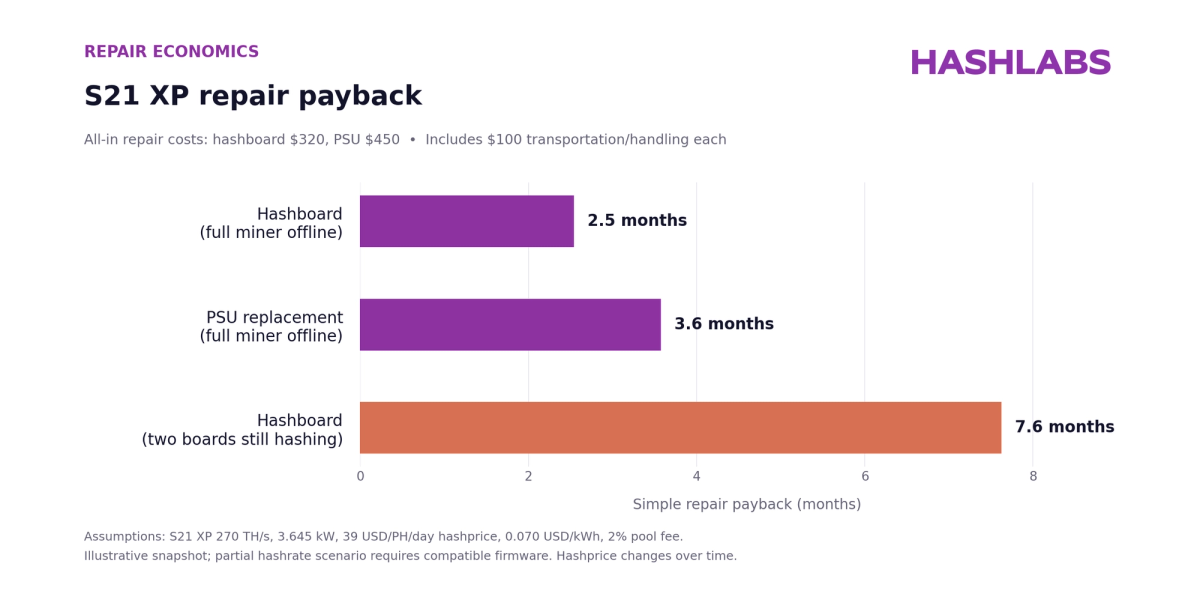
Illustrative S21 XP repair payback, including $100 transport and handling in each repair cost. Profitability is assumed constant for the simple calculation.
This calculation is a starting point, not a guarantee. You can test different hosting rates, failure assumptions and projected returns in the Hashlabs Bitcoin mining ROI calculator. Payback begins after the miner is restored to operation; waiting weeks for a repair reduces the remaining time available to earn the money back. Forecasts should also account for changing hashprice, electricity costs, reliability after repair and the resale or scrap value of the defective equipment.
For perspective, if the assumed hashprice dropped from $39 to $30/PH/day, keeping all other inputs the same, a fully functioning S21 XP would earn only about $54/month in operating profit. The $320 hashboard repair would then need roughly 5.9 months of subsequent operation to pay back rather than 2.5 months. Future economics can make a currently attractive repair unattractive.
As a rule of thumb, we favor repairs with payback shorter than one year, and substantially shorter for older hardware. The right decision may be to authorize a board repair, replace a PSU, keep hashing at reduced capacity where supported, or retire the machine. Do not repair equipment simply because the workshop says it can be repaired.
7. How can you reduce future repair needs?
Once you understand the repair process, the next question is how to avoid unnecessary repairs in the first place. Two choices have an outsized influence: the miner model and the operating environment.
Choose proven miner models, not just the cheapest specifications
From Hashlabs' operating experience, established flagship models have generally been a better reliability choice than some lower-cost derivatives. Within BITMAIN's lineup, for example, we would tend to favor proven flagship S21-series models over derivatives such as the T21 when reliability is a priority. This is an operational observation, not a controlled industry-wide model comparison.
But even flagship miners can contain weaker production batches, as the Finland PSU example shows. Ask what the facility has actually operated, what has failed, whether spare parts are available and whether it has noticed problems with a particular batch. For specifications and available equipment, compare ASIC miner models.
Choose the right cooling and operating environment
Hydro-cooled miners can benefit from more stable temperature control and less dust reaching internal electronics than air-cooled models, assuming the liquid-cooling system is properly designed and maintained. Hydro also introduces its own maintenance needs—coolant quality, seals, pumps and leaks.
Hot, dusty environments put greater demands on air-cooled miners. If your machines will run in such a location, evaluate hydro cooling, filtration, maintenance frequency and the site's proven reliability record. Also consider where repairs can be performed: a low hosting rate may not compensate for expensive, slow access to technicians and parts. For facility cost comparisons, it also helps to understand power usage effectiveness (PUE) in Bitcoin mining.
8. Common mistakes hosting customers make
Repair mistakes are part of broader hosting due diligence. For the full picture, see 9 costly Bitcoin mining hosting mistakes to avoid.
- Underestimating failure risk. Plan for hardware repair costs and downtime even with premium miners.
- Buying solely on purchase price and efficiency. Reliability, spares and production-batch history affect lifetime profitability.
- Ignoring repair capability when choosing a host. Electricity rates alone do not describe the full operating experience.
- Overlooking local repair infrastructure. In locations with few ASIC specialists, shipping and workshop queues can turn routine repairs into long outages.
- Treating warranty as comprehensive protection. Verify the actual coverage, process, timing and exclusions.
- Approving repairs without economic analysis. Compare all-in cost against additional net profit, not gross mining revenue, and account for remaining machine life.
9. Frequently asked questions about hosted Bitcoin miner repairs
Who pays for a hosted Bitcoin miner repair?
The hosting contract controls. Equipment owners commonly pay for hardware failures; the host coordinates repairs. Request an all-in quote, and check the treatment of warranty claims, operator-caused damage and downtime charges.
How long does a hosted ASIC miner repair take?
On-site component swaps may be quick; specialist repairs and shipping can take weeks. One Hashlabs Finland repair batch took 46 days from dispatch to return. Ask for total expected downtime, not just workshop time.
Are hosted Bitcoin miners covered by warranty?
Many new ASIC miners carry about one year of manufacturer warranty, but exclusions and start dates vary. Even a covered repair may entail shipping costs and weeks offline. Check the specific terms.
How do I know whether my miner is worth repairing?
Divide all-in repair cost by additional monthly net profit restored. Compare payback with remaining profitable life and downtime. If a miner still hashes partially, count only the profit restored—not its total revenue.
10. Repair checklist before signing a hosting agreement
- [ ] The host proactively identifies faults, performs initial troubleshooting and notifies customers.
- [ ] There is one clear point of contact responsible for coordinating repairs and transport.
- [ ] You know which parts can be exchanged on site and which must go to a specialist.
- [ ] The facility has suitable spare components and a workable repair route for your miner model.
- [ ] Repair quotes cover all relevant work, parts, transport, handling and reinstallation.
- [ ] The agreement defines approval limits, warranty handling, liability and billing during downtime.
- [ ] You understand expected end-to-end turnaround, not only time at the repair shop.
- [ ] After repairs, the provider verifies hashing and provides an appropriate repair record.
- [ ] You can compare the full cost of repair with expected additional net mining profit before authorizing it.
The best Bitcoin miner repair strategy is to choose a capable hosting provider, reduce avoidable failures, and repair only when doing so is economically sensible.