Is This Bitcoin Mining Host Telling the Truth? 7 Checks Before You Sign
Before trusting a Bitcoin mining host, verify its legal identity, management, facilities, operational control, track record, customer experiences, and claims, then compare its answers with independent evidence and walk away if you find deliberate dishonesty.
A hosting provider can promise almost anything. Before you send money or miners, here's how to uncover red flags, challenge its claims, and find out whether you can really trust it.
The most important thing when choosing a Bitcoin mining hosting provider is finding a company you can trust. You're about to hand over expensive equipment to people who may be thousands of kilometers away. But how do you know whether they're actually telling you the truth?
A professional website, positive reviews, and convincing answers can make almost any company look credible. None of these proves that it can deliver what it promises.
At Hashlabs, we've operated mining facilities and worked with third-party hosting partners across several countries. We've seen how differently operators can treat their customers, and how the reality of a hosting operation can differ from what is advertised. Ultimately, you're trusting the people behind the company. Their honesty, competence, and sense of responsibility matter enormously.
The best way to assess a provider's trustworthiness is to understand its claims, investigate them independently, and challenge the company with difficult questions. Then compare its answers with the evidence and look for signs of dishonesty.
This guide walks you through seven practical checks to make before signing an agreement, sending money, or shipping your miners.
1. Find out exactly what the provider is claiming
Before investigating a hosting company, establish what it actually promises.
Read its website, company presentation, facility descriptions, and other marketing materials carefully.
Pay particular attention to claims about:
- Experience: How long has the company been operating, and what experience does its management claim?
- Facilities: Where does it say it operates, and how much capacity does it have?
- Operations: Does it manage its own facilities, employ technicians, or operate through partners?
- Performance: What uptime, reliability, and service capabilities does it advertise?
- Reputation: What does it say about its customers, partnerships, and operating history?
Save important claims, including screenshots or links. Focus on specific statements you can investigate rather than vague promises about being reliable or professional.
Your goal is to establish exactly what the company claims so you can find out whether those claims are true.
2. Investigate the company and the people behind it
Now start checking those claims independently.
Find the company's legal name and registration number. Look it up in its country's official business register, such as Singapore's ACRA Bizfile or UK Companies House.
Check when the company was established, who manages it, and whether its business history matches what it advertises.
Then investigate the founders and management. Review their LinkedIn profiles, previous companies, business records, and public industry activity.
Look for things that don't add up.
For example, imagine a company claiming to directly operate 2 GW of active Bitcoin mining capacity while reporting only $1 million in annual revenue.
Those figures would be wildly inconsistent with the scale of the business it claims to operate. There could be differences in how the company reports revenue or counts third-party capacity, but it would need a very convincing explanation backed by evidence.
If the company cannot explain the contradiction and continues insisting that its claims are accurate, you have good reason to suspect it is exaggerating or lying. And if it lies about its size, what else might it be lying about?
But numbers are only part of the investigation.
The people behind the company are ultimately the most important. They will make the decisions that determine what happens to your miners when things go wrong.
In our experience at Hashlabs, we've seen hosting operators prioritize short-term financial gains over long-term customer relationships. We've also encountered situations where operators shifted their attention to other business opportunities, leaving existing hosting customers behind.
A company might have real facilities and genuine experience but still be run by people who don't take their responsibilities to customers seriously.
Research the management team's reputation and previous businesses. How have they treated customers and business partners? Have they built lasting operations, or do they repeatedly move between ventures?
You're not just evaluating a company. You're deciding whether to trust the people running it with your equipment and investment.
Write down anything that doesn't add up. These findings will become questions to ask management later.
3. Check whether its mining operations are real
Next, investigate what the company actually operates or controls.
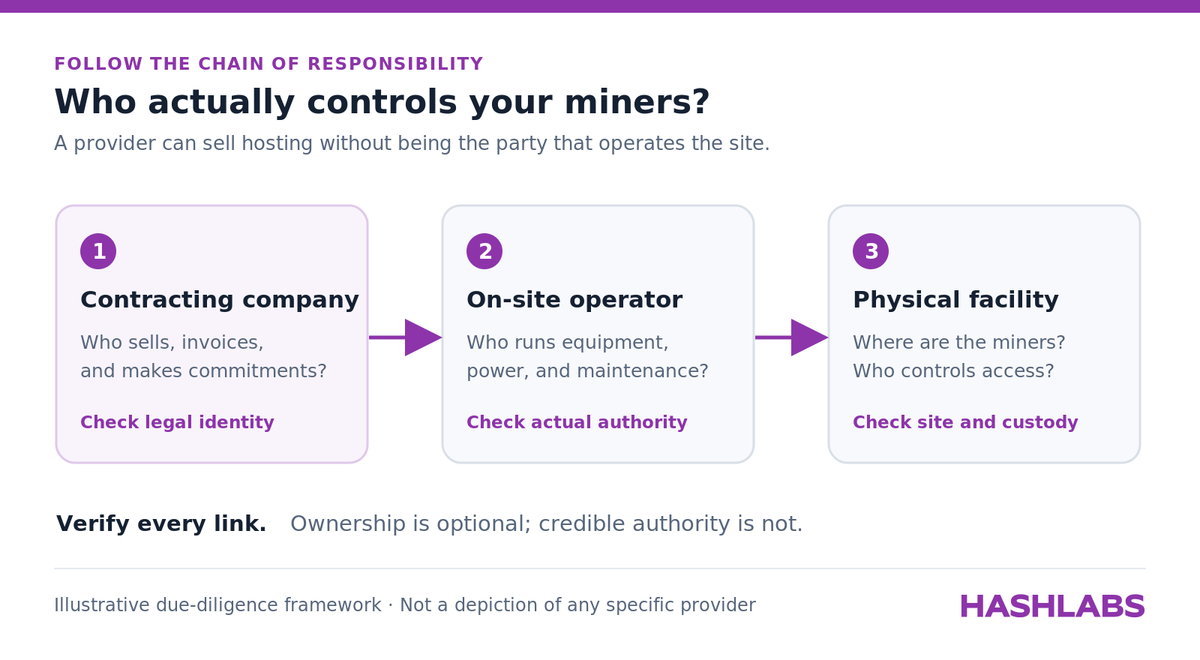
A hosting provider doesn't need to own its mining facilities. Many legitimate companies work with independent facility operators, including Hashlabs.
What matters is whether the provider has enough operational control to deliver what it promises.
Some hosting companies present large facilities as their own operations when their actual involvement is much smaller.
For example, a provider might advertise a 200 MW mining facility as its own when it merely leases 5 MW inside that facility. It might not even have independent access to the site, needing permission from the actual operator just to visit.
That's very different from controlling a mining operation.
If the provider cannot independently access the site, arrange maintenance, or make important operational decisions, your miners depend heavily on another company over which the provider may have limited influence.
We would be very cautious about hosting with a provider that lacks meaningful control over the facility and the equipment it is responsible for.
Research the facilities it advertises. Look for recent photographs, operating history, public information about the sites, and evidence of its relationship with local operators.
Try to establish who manages the facilities, who controls access to equipment, and who handles maintenance and outages.
Be careful with unusually large capacity claims. Some companies advertise hundreds of megawatts without clearly distinguishing between operating facilities and future projects.
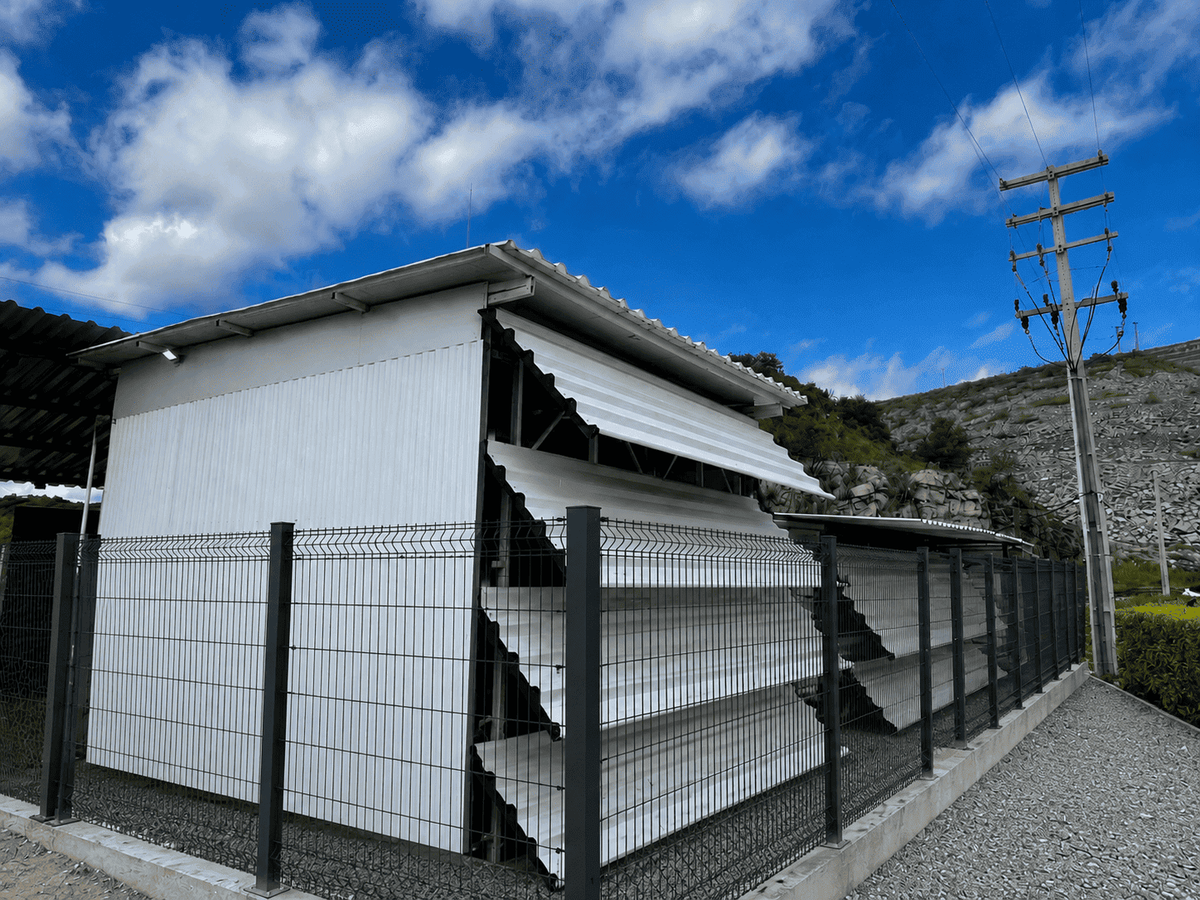
A company showing pictures of a real mining facility doesn't necessarily mean it operates or controls that facility.
At this stage, you might not be able to verify everything independently. That's fine. Record which claims remain unproven so you can request specific evidence before making a commitment.
4. Investigate its track record and what customers really say
A company might advertise 99% uptime and excellent customer service. But has it actually delivered those results?
Look for evidence of previous operations, customer experiences, and problems the company has encountered.
Start with Google Reviews, Trustpilot, Reddit, and Bitcoin mining communities.
Customer reviews are one of your most valuable sources of real operating experience. Genuine reviews can reveal what it's actually like to work with a provider, and building a large, credible reputation from fake accounts alone isn't easy.
But don't blindly trust high ratings either.
At Hashlabs, we're aware of hosting companies with excellent online reviews despite having many deeply dissatisfied customers. Some operators incentivize or pay customers to leave positive reviews, creating a much better public impression than their actual service deserves.
This happens in the mining industry, and it's one reason reviews should never be your only source of information.
Don't just look at the average rating. Read the negative reviews and see how the company responds.
Are multiple customers complaining about the same problems? Does the company provide reasonable explanations? Are complaints resolved, or do customers repeatedly report being ignored?
Every business can have unhappy customers, and some reviews may be unfair or fake. But repeated, detailed complaints about downtime, poor communication, or broken promises should raise concerns.
Try to find existing customers independently rather than relying only on references selected by the provider.
Ask about their actual experience. Did uptime match what was promised? How were repairs handled? What happened during serious outages?
Where possible, ask the provider for sample historical uptime reports or monitoring records from existing operations, with customer information hidden. Compare these with what customers tell you.
If the provider claims to perform repairs on-site, see whether customers confirm that repairs are handled efficiently. Our Bitcoin miner repair guide for hosting customers explains what a capable repair process should look like.
Look for the gap between what the provider promises and what its existing customers actually experience.
5. Use AI to dig deeper and uncover red flags
AI can be a powerful tool for investigating hosting providers, but most people don't take their research far enough.
I recently experimented with asking AI to recommend Bitcoin mining hosting companies.
The first answer gave me a list of providers, much like you would expect. But then I started asking more critical questions about one of the companies.
The deeper investigation surfaced reports and allegations of fraudulent behavior involving the company's CEO and owner over several years—issues that hadn't appeared in the initial recommendation.
These findings still needed to be checked against their original sources before drawing conclusions. But they demonstrated something important: information that could completely change your assessment of a provider might not appear when you simply ask AI for a recommendation.
Getting recommended by AI doesn't mean a company has been thoroughly investigated.
The real value comes from asking AI to challenge a specific provider's claims.
Start with:
Investigate [provider name] as a Bitcoin mining hosting provider. Research its legal company, management, facilities, operating history, customer reviews, and reputation. Find independent evidence supporting its claims and identify any complaints or inconsistencies. Include original sources.
Then push harder:
Now take a more critical approach. Look for anything that contradicts the company's claims. Are its facilities and advertised capacity real? Can its operating history and performance be verified? Are there warning signs involving its founders, management, customer experiences, or public records? What difficult questions should I ask the company before signing a hosting agreement?
Finally, challenge the AI's own findings:
Separate verified facts from company claims, allegations, and assumptions. Identify the most important things that remain unverified and give me a list of specific questions to challenge the provider.
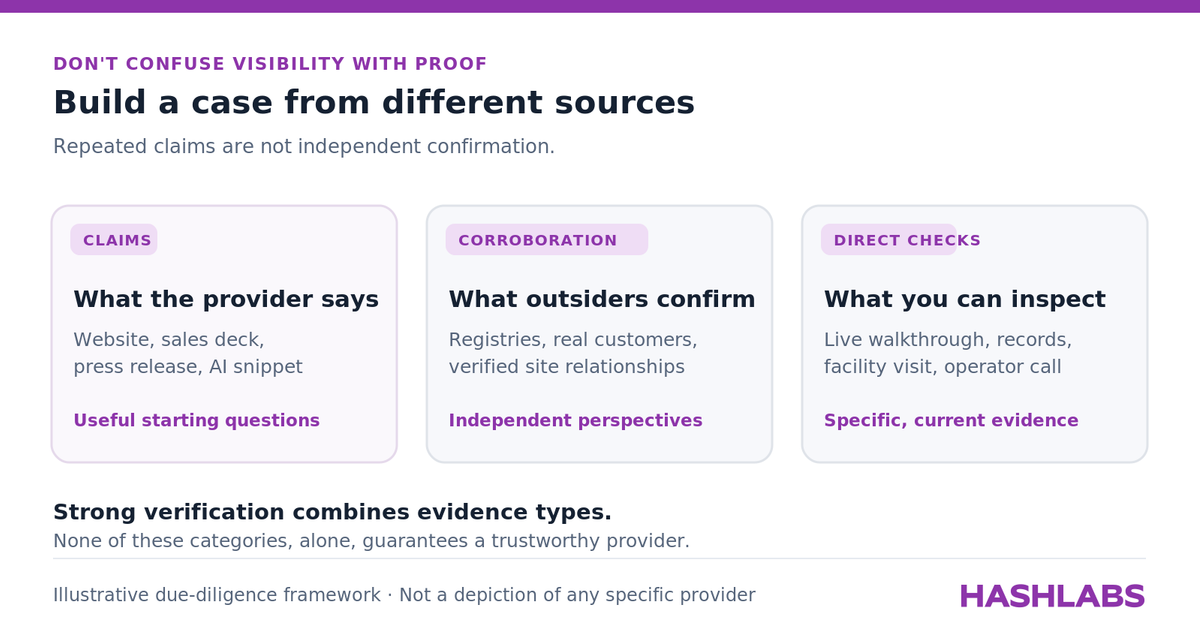
Read the original sources yourself. AI can misunderstand information, repeat marketing claims, or even invent details.
And remember: AI finding no negative information doesn't mean the company is trustworthy.
Use AI to uncover information you might otherwise miss and develop questions the provider may not be expecting.
6. Put the provider to the test with difficult questions
Now comes the most important part of the investigation.
You've studied the company's claims, checked public records, investigated its operations, examined customer experiences, and used AI to identify potential problems.
Now it's time to challenge the provider directly.
Don't waste time asking generic questions such as whether the company is reliable or experienced. Almost every sales representative will say yes.
Instead, ask specific questions that require detailed explanations and evidence.
For example:
- Operating history: You claim to have operated mining facilities since a particular year. Which facilities were those, and can you demonstrate that history?
- Operational control: Who actually runs the facility where you're proposing to host my miners? What authority do you have over its operations, and can I confirm your relationship with the operator?
- Power and capacity: Can you show evidence that the capacity you're offering is operating and secured?
- Uptime: Can you provide six months of historical uptime reports from that facility? How is uptime calculated, and which interruptions are excluded?
- Maintenance: Who repairs failed miners, where are repairs performed, and can you show how long recent repairs took?
- Operational problems: What was the most serious problem at this facility in the last year? What happened, and how was it resolved?
- Customer complaints: I found customers reporting a particular problem. What happened, and how did you handle it?
- Management responsibility: If something goes seriously wrong and customers suffer losses, who takes responsibility, and how have you handled situations like this in the past?
For larger deployments, request a live facility walkthrough, relevant operating documents, or an independent site visit before committing.
Ask follow-up questions. If an answer is vague, ask for details. If something contradicts your research, raise it directly.
Remember: a convincing explanation is not the same as a truthful explanation. Look for evidence.
Don't be afraid of being a difficult customer
At Hashlabs, we've found that customers who ask thoughtful, challenging questions before signing generally earn more respect, not less. It shows that they understand the business and take their investment seriously.
You're trusting another company with expensive equipment, potentially for years. You have every right to investigate it thoroughly.
A professional hosting provider should welcome reasonable due diligence. If it becomes defensive or makes you uncomfortable for asking legitimate questions, pay attention.
Don't worry about asking too many questions. Worry about trusting a provider without asking enough.
7. Look for lies, inconsistencies, and warning signs
By now, you should have a much clearer picture of the company you're considering.
The final step is to decide whether its answers have been truthful and whether you have enough evidence to trust it.
Compare what you found on its website with your independent research and the explanations it gave you.
Look for patterns.
Does the company consistently provide specific, accurate answers? Do its explanations match information from customers, operational records, and other sources?
Or do you notice exaggerations, changing stories, unanswered questions, and claims that can't be supported?
For example, a provider might claim to have operated a facility for five years, while your research suggests it only started operating there recently.
Ask it to explain the difference.
Perhaps there's a reasonable explanation. But if the company knowingly misrepresented its experience, that's a serious warning sign.
Even a small, deliberate lie is a major red flag.
If a company is willing to lie about something minor, why should you trust its claims about uptime, operational capabilities, or the safety of your equipment?
Also pay attention to how it reacts when challenged.
A trustworthy operator should be willing to answer reasonable questions honestly, explain problems, and acknowledge things it cannot prove.
It doesn't need to know every answer immediately. Some information may be confidential, and honest mistakes happen.
But repeatedly avoiding questions, changing explanations, making unsupported claims, or pressuring you to commit before completing your investigation are serious warning signs.
And trust your judgment. If something feels suspicious, investigate further. You don't need to prove that a company is fraudulent to decide you aren't comfortable trusting it.
The goal isn't to choose the provider that gives the most impressive answers. It's to choose one whose answers are true.
The bottom line: Trust must be earned, not promised
Before choosing a Bitcoin mining hosting provider, you need to know whether the company can actually deliver what it promises.
Start by understanding its claims. Investigate those claims independently, identify anything that doesn't add up, and challenge the provider with specific questions.
Then judge its answers against the evidence.
A trustworthy provider should be able to demonstrate that its claims are true, answer difficult questions honestly, and show that it can deliver what it promises.
If you discover deliberate dishonesty, even about something small, that's a strong reason to walk away.
Once you've established that a provider is trustworthy, you can evaluate the hosting offer itself. Our guides to 9 factors to evaluate when choosing a Bitcoin mining hosting provider and 9 costly Bitcoin mining hosting mistakes cover those wider considerations. When comparing offers, you should also understand how to calculate your real hosting electricity rate.
Considering hosting your Bitcoin miners? Explore Hashlabs' hosting options. If you have questions about evaluating a provider or facility before committing, contact us. We're happy to help.